Cosmetologist Standing Desks Compared for Stable Workstations
By Kwame Boateng • 6th Jun
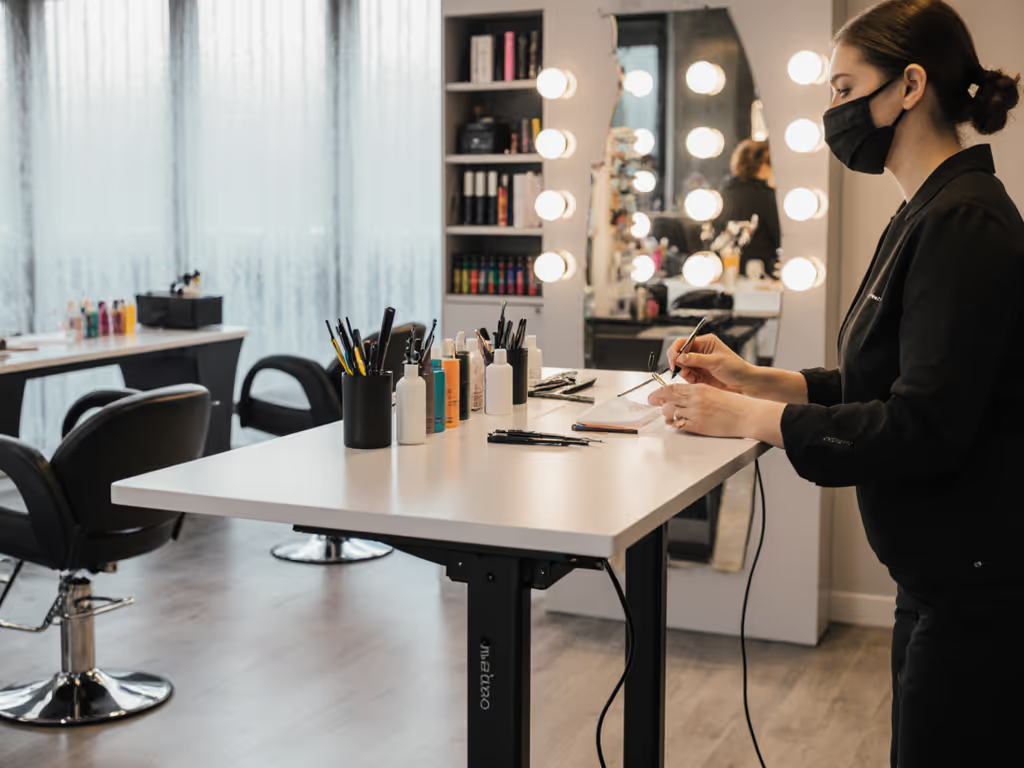
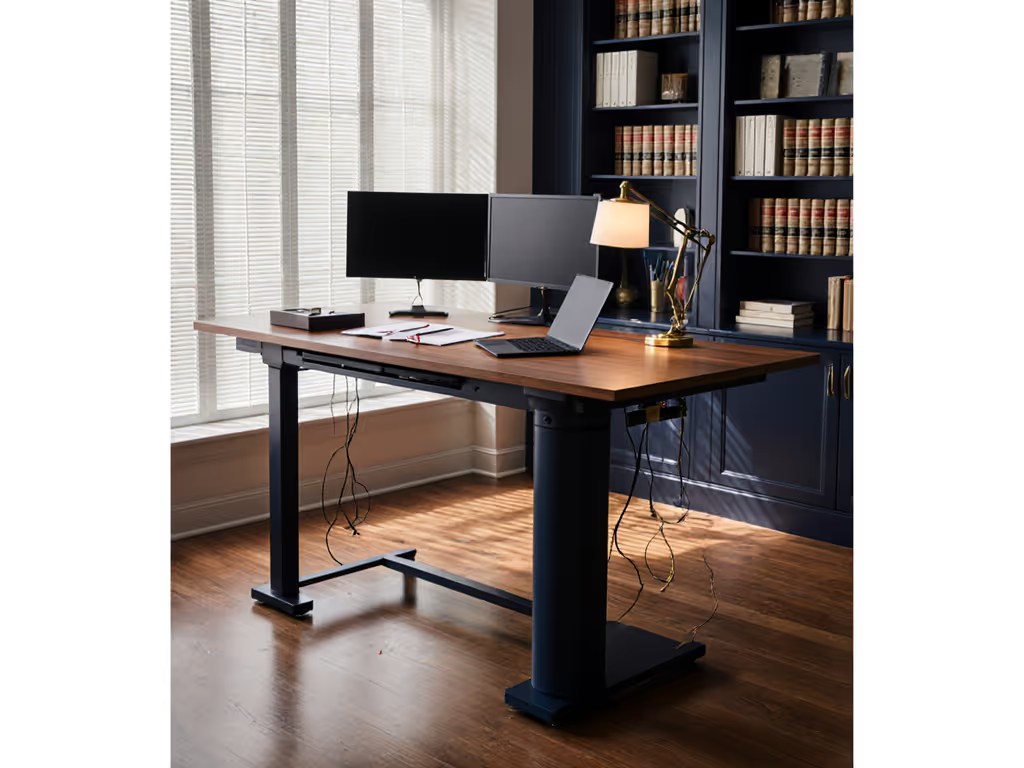
A cosmetologist standing desk is not just an "office ergonomic desk" in a new color; it is the load-bearing core of a beauty professional workstation where liquids, sharp tools, and clients' faces all come within arm's reach. In this comparison, I'll walk through the frame designs, surfaces, and support policies that actually keep your station stable, serviceable, and profitable over years, not just pretty on day one.
FAQ 1 - Do cosmetologists really need a standing desk, or is a salon station enough?
If your work mixes hands-on services and desk work (consultations, booking, content creation, color formulation, lash mapping), a height-adjustable station solves a different problem than a traditional fixed salon counter.
Research on sit-stand work shows that alternating positions can reduce low-back discomfort compared with fixed-height desks, especially when workers stand for portions of the day but can also sit or perch.[5] For cosmetologists, that means you can:
- Stand tall for hair coloring or cosmetic procedures, with the tray at forearm height for precise brush control.
- Drop the surface to seated height for paperwork, editing photos, or long social media sessions without hunching.[5]
Standing desks are defined as full desks whose entire worksurface moves up and down, either manually or via electric motors.[3] For posture, reach, and measurement basics, see our standing desk ergonomics guide. For a beauty station, that movement lets you keep your tools, bowls, and organizer trays at a constant ergonomic height while you swap between standing and stool work.
The main reasons cosmetologists consider a standing desk are:
- Cosmetic procedure stability: Less wobble for eyeliner, brows, lashes, and detailed color work.
- Body mechanics: Keep elbows near 90° and shoulders relaxed whether you are over a client or a color chart.[5]
- Dual-use: One consolidated station for service, admin, and content creation instead of a separate office corner.
FAQ 2 - How is a cosmetologist standing desk different from a generic office ergonomic desk?
Most office ergonomic desks are designed for static typing loads: monitors, keyboards, maybe a printer.[1][12] A beauty station adds:
- Dynamic lateral loads: You are pushing, mixing, reaching, sometimes leaning on the top.
- Point loads: Heavy glass jars, lamps, and metal trolleys parked on one side.
- Chemical exposure: Peroxide, acetone, dyes, alcohols, and disinfectants.
Buyer's guides written for estheticians and lash techs emphasize compact desks with integrated storage, durable tops, and stable bases that handle rolling stools and trolleys nearby.[15] Those constraints change which frames and surfaces make sense.
Key differences to look for versus a standard office frame:
- Higher real stability requirement: What is acceptable wobble for typing may be disastrous when you are tracing a lash line.
- Surface durability: Many low-cost office tops are particleboard with thin laminate and modest moisture resistance.[1][12] You need better edge sealing and chemical tolerance.
- Storage access: Drawers and shelves must open smoothly at both sitting and standing heights without tipping risk.[15]
If a desk is marketed primarily to software workers and gamers, assume you'll have to double-check surface finish, edge banding, and spill resistance before trusting it around developer-strength lighteners.
FAQ 3 - Which desk frame type is most stable for beauty work?
From a stability standpoint, most electric standing desks fall into four structural patterns.[1][12][13]
3.1 T-frame vs C-frame vs four-leg vs fixed-plus-converter
| Frame pattern | Core idea | Pros for cosmetology | Cons for cosmetology |
|---|---|---|---|
| T-frame (two legs, centered feet) | Common office design, feet extend front/back | Good all-around; easy stool clearance; proven designs can be very stable[1][12] | Can rock side-to-side at tall heights if crossbar is weak |
| C-frame (feet pushed back) | Feet mainly behind legs for more toe room | Great toe space and client access | Typically less stable fore-aft, easier to tip with heavy front loads |
| Four-leg | Each corner has a powered leg | Excellent stability and weight capacity[13][14] | Higher cost, more to repair, trickier assembly |
| Fixed station + converter | Traditional cabinet with a height-adjustable platform on top[3] | Keeps plumbing/storage; cheaper upgrade path | Platform can be shaky; poor for precision work; height range limited[3] |
For cosmetic procedure stability, I rank these:
- Four-leg frame: Overkill for typing, but ideal if your station carries heavy lamps, glass, and maybe a small sink module.[13][14]
- High-quality T-frame with solid crossbar: Good compromise of stability, price, and repairability, especially when used at modest heights.[1][12]
- C-frame or converter setups: Only if space absolutely demands it or if you are upgrading an existing built-in.[3]
For lash, brow, and detail work, prioritize:
- Wide feet (front-to-back) to resist tipping when you lean.
- A rigid crossbar between legs; models without any cross support tend to twist more at full height.[1][12]
- Frames that publish a realistic weight rating (often 220-350 lb on quality models) and are verified in independent reviews for low wobble.[1][12][13]
For cosmetologists, a "good enough" office desk can still be too wobbly once you add lateral forces from mixing, wiping, and leaning over a client.
FAQ 4 - Electric, manual, or fixed height: which is better for a beauty professional workstation?
Each height mechanism has different implications for downtime and repair.
4.1 Electric standing desks
Most modern standing desks use electric motors in the legs, controlled by a handset with memory presets.[1][12]
Advantages for beauty work:
- Quick, push-button transitions between color-mixing height, treatment height, and admin height.
- Memory presets that can store heights for multiple techs sharing one station.[5]
- Smooth, quiet motion on higher-end units, which matters in a calming spa setting.[12][13]
Trade-offs:
- More components to fail (motors, control box, handset, cables).
- Anti-collision systems can sometimes stop unexpectedly or fail to detect small obstacles.[12]
When reviewing options, I translate warranties into coverage scenarios with simple questions: If a motor fails in year four, who pays shipping? Can they send a single leg, or do they insist on replacing the entire frame? I have seen a motor fail in month fourteen and one vendor demand the whole frame back on a pallet, while another mailed out a gearset we installed with a Torx driver in minutes. The policy difference was effectively a week of lost use vs a single appointment gap.
4.2 Manual crank or pneumatic
Manual crank desks and gas-spring systems avoid electronics.[3]
Pros:
- Fewer failure points and no controller errors or desynchronization.
- No power requirement; useful if outlets are scarce around the station.
Cons for cosmetology:
- Raising/lowering under full load (lamps, tools, products) can require real effort.
- Adjustments are slower, so many users simply stop changing height, losing the ergonomic benefit.[5]
4.3 Fixed-height with add-ons
You can keep a fixed salon cabinet and add:
- An over-desk platform for laptop or notes.
- Adjustable tool trolleys on casters.[15]
This is budget-friendly and often uses existing plumbing and storage, but the platform surfaces tend to be less stable for precision work and may not reach an ideal height range for all users.[3] Compare long-term value in our converter vs full desk cost analysis.
For a primary cosmetologist standing desk, I generally favor an electric T-frame or four-leg frame from a transparent vendor with documented spare parts, and manual or converter solutions as secondary stations.
FAQ 5 - What size and layout work best for hair coloring and cosmetic procedure stability?
Beauty buyer guides consistently recommend compact, deep enough desks for small studios and suites, often around 40-55 inches wide and 24-30 inches deep, so there is room for movement around a client chair while still fitting lamps and organizers.[15]
When sizing your surface:
- For hair coloring workstations, aim for at least 24-30 inches of depth to park bowls, scales, foil stacks, and still have a clean landing zone for your forearms.
- For lash/brow/cosmetic work, depth matters less than being able to position the desk so your shoulders stay relaxed and elbows are near 90° while you reach your tools.[5]
Stability improves when:
- Heavy items (lamp bases, product racks) are clustered over the legs, not at the front edge.
- You avoid cantilevered monitor arms or tool trays hanging far off the side unless the frame is rated for that kind of torque.[1][12]
A good rule of thumb: if you are planning dual heavy lamps, a ring light, and glass or metal organizers, treat your load as closer to real 80-120 lb rather than the optimistic a few small peripherals many office reviews assume.[1][12]
FAQ 6 - What surface materials cope best with dyes, acetone, and disinfectants?
Top durability is a quiet failure point for beauty work. Many budget desks use thin laminate over particleboard with standard edge banding, fine for dry offices, less so for peroxide splashes.[1][12]
When comparing tops for a beauty industry standing desk, look at:
- High-pressure laminate (HPL) or thick melamine with fully wrapped edges for better moisture resistance.[15]
- PVC or ABS edge banding that seals corners; raw or barely sealed edges swell quickly if liquids seep in.
- Easy-clean textures; heavy wood grain embossing can trap pigments.
Avoid:
- Exposed MDF/particleboard at cable grommets.
- Cheap "peel-off" vinyl skins that hide rather than solve durability issues.
Buyer's guides for esthetician and nail desks repeatedly flag chemical resistance and cleanability as deciding factors, particularly for acetone and frequent disinfectant sprays.[15] If you need hospital-grade surfaces, review our chem-resistant standing desks. A desk that lasts 10 years mechanically but delaminates in year two is still a failure from a lifecycle-cost standpoint.
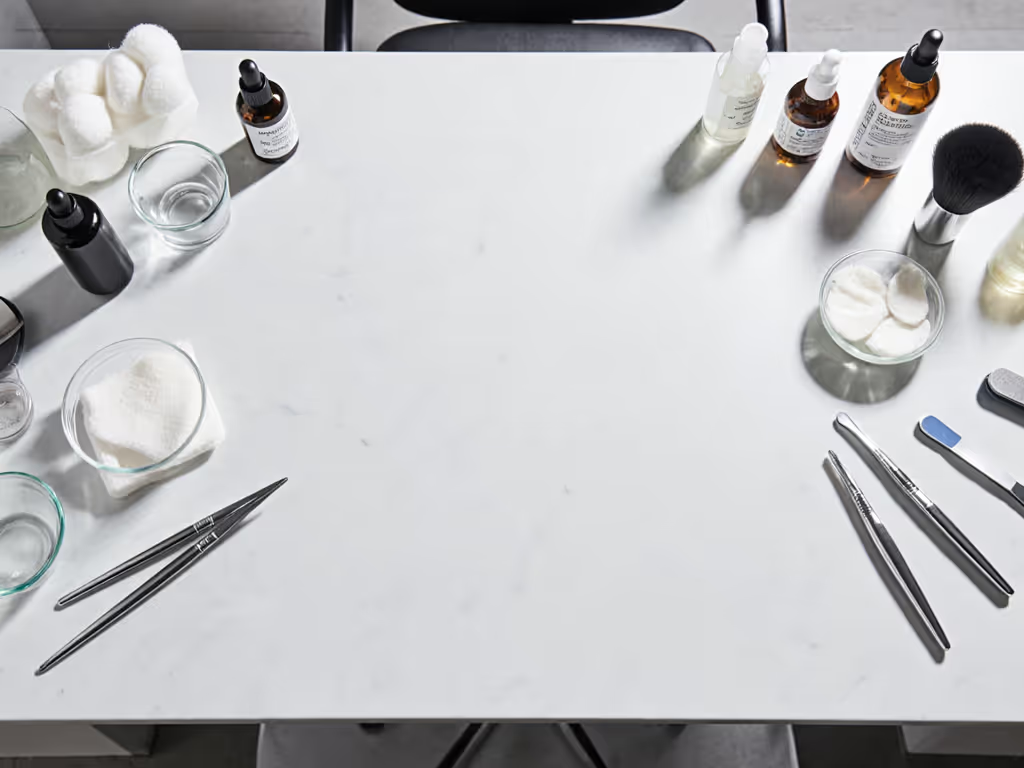
FAQ 7 - How do I manage cords, tools, and add-ons without making the desk wobbly?
Beauty stations often host:
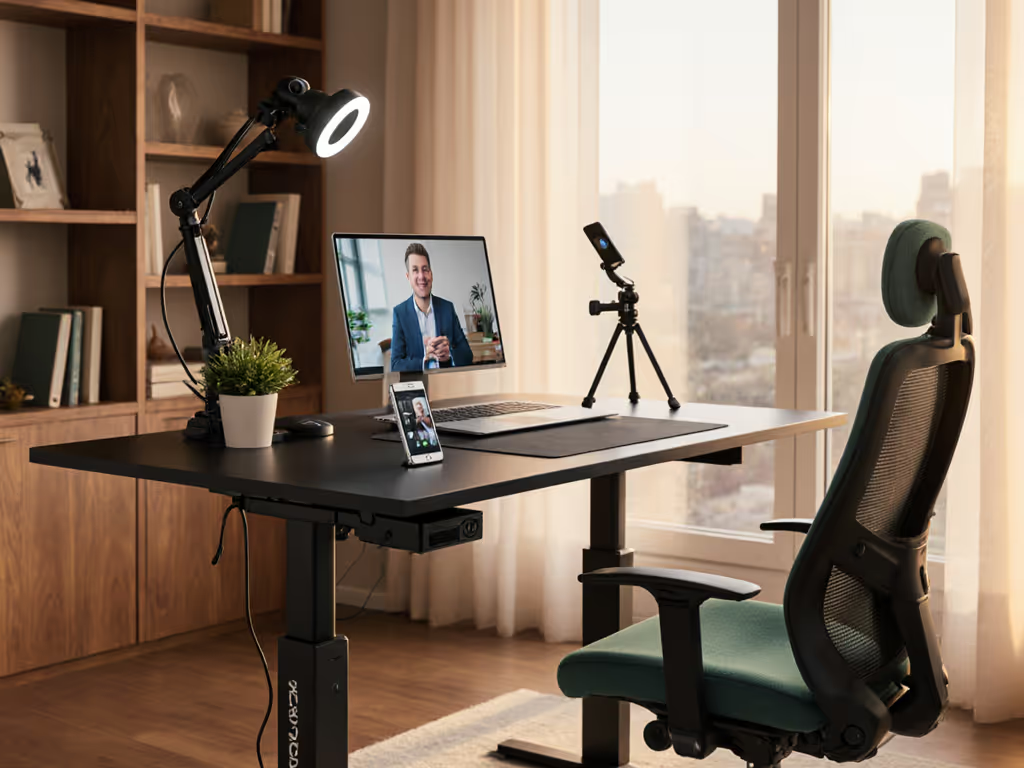
- LED lamps and ring lights
- Hot tools (curling irons, straighteners)
- Magnifiers and cameras for content
To keep cosmetic procedure stability while adding all that hardware:
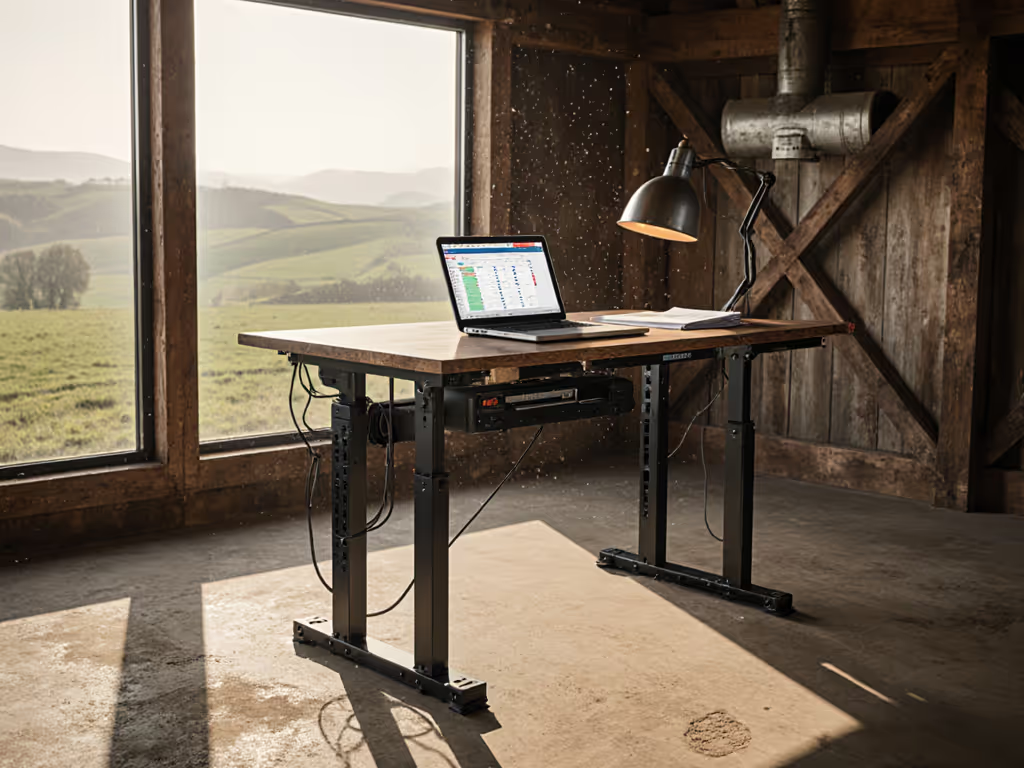
- Choose desks with metal underside rails or pre-drilled patterns that accept cable trays and power strips without weakening the top.
- Mount cable trays and surge strips close to the frame's crossbar, not hanging far under the front edge, to keep weight over the structure.
- Use clamp-on accessories (lights, small shelves) where possible instead of drilling many holes near the front edge.
For under-desk storage:
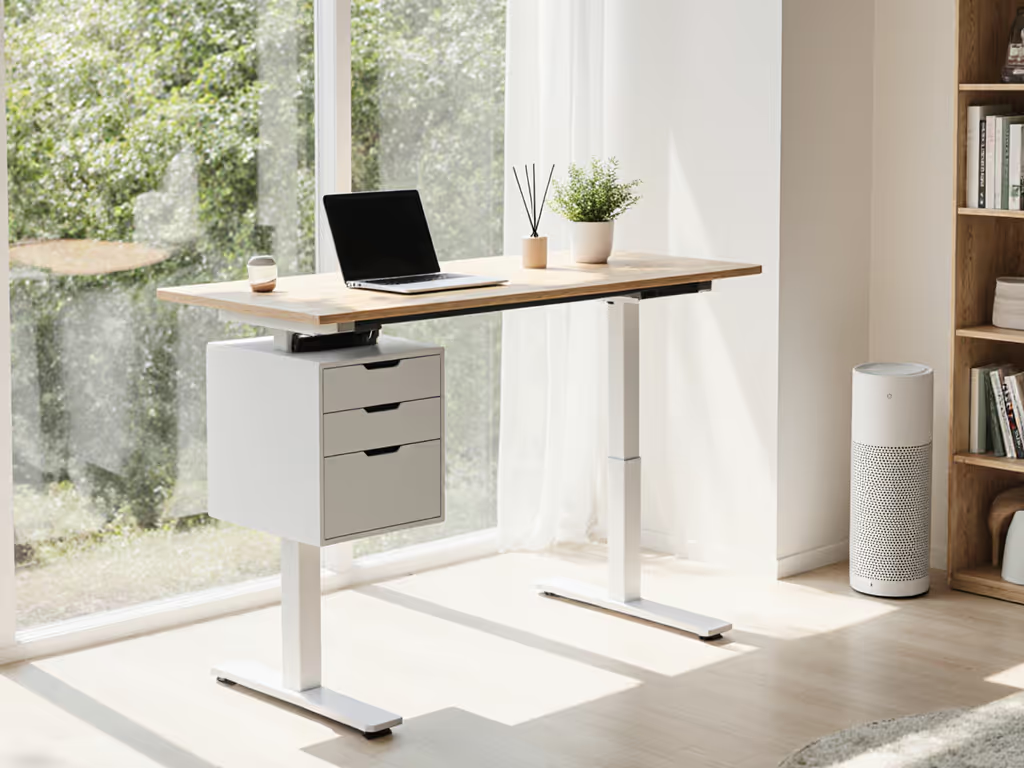
- Prefer shallow drawers and small cabinets mounted near the legs.
- Avoid large, heavy drawers mounted in the center where they can act as a swinging mass and amplify wobble when pulled.
This is where serviceability overlaps with stability: if the desk uses standard screw patterns and common fasteners, you can reconfigure or move accessories without destroying the top. I prefer designs you can open with common tools and documented spares (parts are policy you can touch).
FAQ 8 - What about noise, anti-collision, and safety around clients?
Noise ratings rarely target beauty spaces, but independent standing desk reviewers often measure motor noise at roughly 40-55 dB for quality frames at typical loads, about the level of a quiet office conversation.[1][12][13] For quiet suites and shared walls, see our standing desk noise reduction guide. For a spa, that's acceptable if changes are infrequent and smooth.
Look for:
- Soft-start/soft-stop motion, which feels more professional than jerky changes.[12]
- Published speed and noise specs, not just adjectives like "whisper-quiet."[1][12]
Anti-collision systems use current sensing or gyros to stop the desk if it hits an obstacle. Generic office reviews note that:
- Some systems are overly sensitive, stopping for minor bumps.
- Others are too insensitive, especially to soft objects.[12]
In a beauty context, that can mean preventing damage to a client chair, or failing to stop before pinching a cable bundle. I recommend testing anti-collision on install with padded blocks and cables to see how the frame behaves before clients are present.
Child locks or key-enabled handsets are worth it in multi-purpose rooms where kids or other staff might fiddle with controls.
FAQ 9 - How do warranties, spare parts, and repairability compare, and why should beauty pros care?
Most mainstream standing desk brands advertise warranties from 5 to 15 years on frames, with shorter coverage on electronics and tops.[1][12][13] But the fine print matters as much as the headline. To keep your station dialed over time, follow our standing desk maintenance and diagnostics.
When I assess a desk for a cosmetologist, I look for:
- Published parts catalogs (legs, control boxes, handsets, feet, cables) with visible SKUs.
- Clear statements on whether they ship individual legs or components for field repair.[1][12]
- Assembly that uses standard fasteners (Torx, hex, Phillips) instead of proprietary hardware.
Serviceability today saves budgets and landfill space tomorrow.
Beauty-specific buyer guides increasingly highlight modular designs where you can swap tops or add side cabinets as your practice grows, instead of replacing the entire station.[15] That matters when your brand evolves from solo suite to multi-chair studio.
I estimate lifecycle cost conservatively by asking:
- If electronics fail once in 7-10 years, can I repair for under 25-30% of the original frame price, or am I forced into a full replacement?
- Are spare parts likely to be available in years 5-10, not just during the marketing cycle?[1][12][13]
In one shared workspace I managed, a desk motor that failed just after the basic warranty triggered an expensive freight return. A different model with a published parts list let us order a single gearset; with a Torx bit, the desk was back in service in under half an hour. That kind of difference is why I say again: parts are policy you can touch.
FAQ 10 - How should different beauty professionals choose among these options?
Here is how I'd align frame choices with common roles, focusing on stability and lifecycle cost.
Lash and brow artists
- Prioritize: maximum stability at mid heights, quiet motion, compact footprint.[15]
- Frame: High-quality T-frame or four-leg if space allows.[13]
- Top: Durable HPL, 24-30 inches deep, easy-clean edges.[15]
Colorists and stylists mixing at a station
- Prioritize: Deep top for bowls and tools, chemical resistance, stability against lateral pushing.
- Frame: Four-leg if the desk carries heavy lamps and back-bar items; otherwise a robust T-frame.[13][14]
- Add: Side carts or wall-mounted racks to keep heaviest items off the front edge.[15]
Estheticians and facial specialists
- Prioritize: Smooth motion, quietness, clean aesthetic, easy disinfecting.[15]
- Frame: Electric T-frame with good anti-collision; avoid noisy or jerky low-end motors.[12]
- Consider: Matching fixed cabinets beside the desk for bulk storage, reducing top clutter.
Hybrid pros (services + heavy computer work)
- Prioritize: True office-grade stability plus beauty-grade durability.
- Frame: Verified stable T-frame used in independent reviews, with documented weight capacity and long warranty.[1][12][13]
- Top: Possibly a thicker office desktop with low-VOC finish and good edge banding, paired with cosmetology-specific mats and tool organizers.[5][15]
FAQ 11 - What are practical next steps to compare models and avoid buyer's remorse?
To move from research to a confident choice:
- Measure your body and space
- Standing elbow height, seated elbow height, and client chair height range.
- Room depth and the clearance you need to walk around the station.
- Define your worst-case load
- Count lamps, hot tools, organizers, electronics, and estimate a realistic total weight.
- Note any heavy items near the front edge that add tipping risk.
- Shortlist 3-5 frames
- Include at least one four-leg and one proven T-frame from brands with transparent specs.[1][12][13]
- Verify height range covers both your sitting and standing elbow heights with some margin.[5]
- Compare on three axes, not one
- Stability: Look for independent testing or reviews that explicitly discuss wobble at tall heights.[1][12][13]
- Durability: Surface materials, chemical resistance, and edge sealing.[15]
- Serviceability: Parts lists, warranty clarity, and whether you can replace components with standard tools.[1][12]
- Contact the vendor
- Ask directly about spare parts availability and out-of-warranty repairs.
- Clarify who pays shipping for warranty replacements.
- Plan the full workstation, not just the desk
- Map where your lamps, carts, and client chair will sit.
- Decide which items will clamp to the desk and which will live on separate stands.
Standing desks started life in offices, but the beauty industry standing desk is now a distinct use case: more chemicals, more dynamic loads, and more need for rock-solid precision. If you evaluate frames the way you evaluate color lines (by how they perform on real heads, not just swatches), you'll end up with a cosmetologist standing desk that feels as steady in year seven as it did on day one.
Related Articles