Standing Desk Converter vs Full Standing Desk: A 10-Year Total Cost Analysis
By Kwame Boateng • 13th Oct
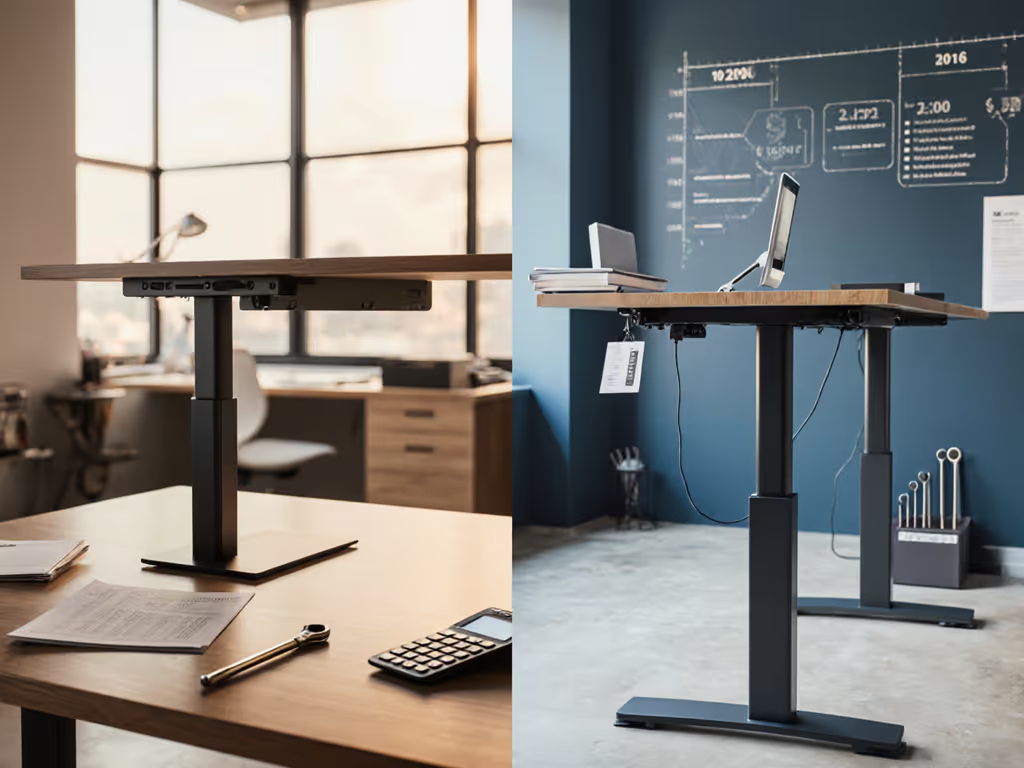
For knowledge workers investing in ergonomic setups, understanding the long-term financial implications of standing desk converters versus full standing desks is crucial. This analysis breaks down costs, durability, and value over a decade, factoring in upfront investment, maintenance, and hidden expenses that impact total ownership costs.
What is the upfront cost difference?
Standing desk converters offer a clear initial price advantage. According to market data[1][7]:
| Component | Converter Range | Full Desk Range |
|---|---|---|
| Entry-level | $100-$199 | $500+ |
| Mid-tier | $200-$399 | $600-$1,200 |
| Premium | $400-$600 | $1,200-$3,000 |
For example, the Flexispot Electric Converter sits at $199.99, while quality full desks rarely start below $500[1][3]. This upfront gap narrows when considering converters as temporary solutions versus full desks as permanent installations[2].
How does long-term durability compare?
Full desks generally outlast converters in structural resilience:
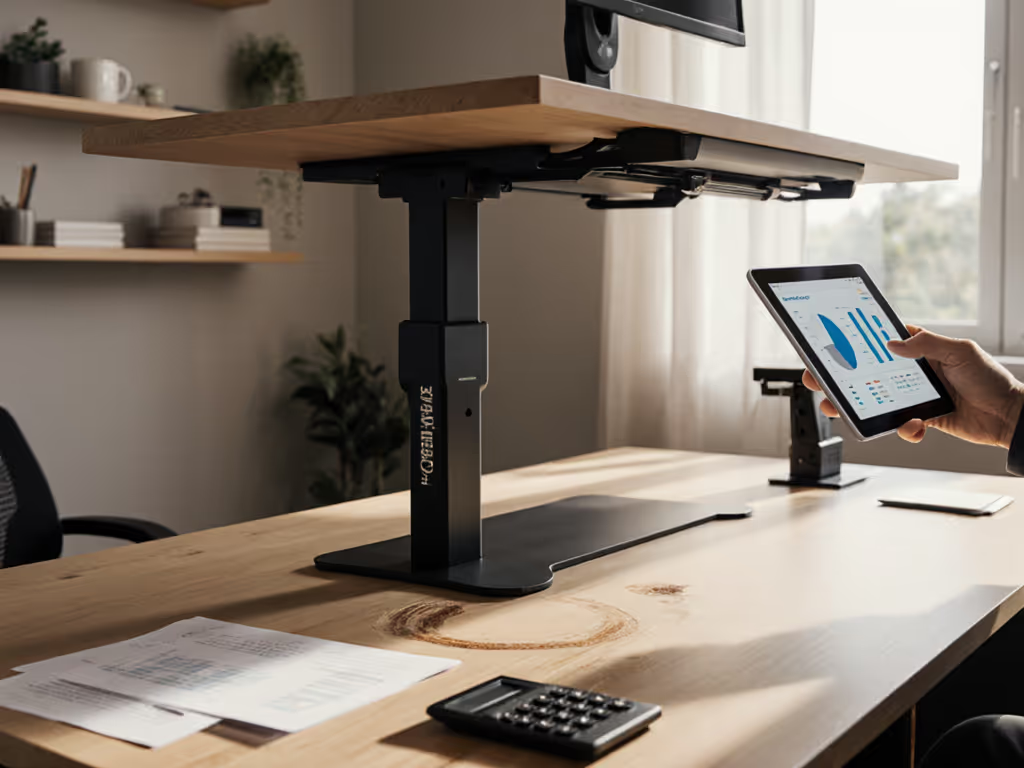
- Frame construction: Full desks use industrial-grade steel frames supporting 250+ lbs, while converters like the Vari Pro Plus 36 max at 35 lbs[4][8].
- Motor systems: Electric full desks (e.g., Uplift V2) use commercial motors rated for 50,000+ cycles versus converter mechanisms prone to spring fatigue[5].
- Warranty coverage: Top full desks offer 10-15 year warranties, while converters average 3-5 years[6].
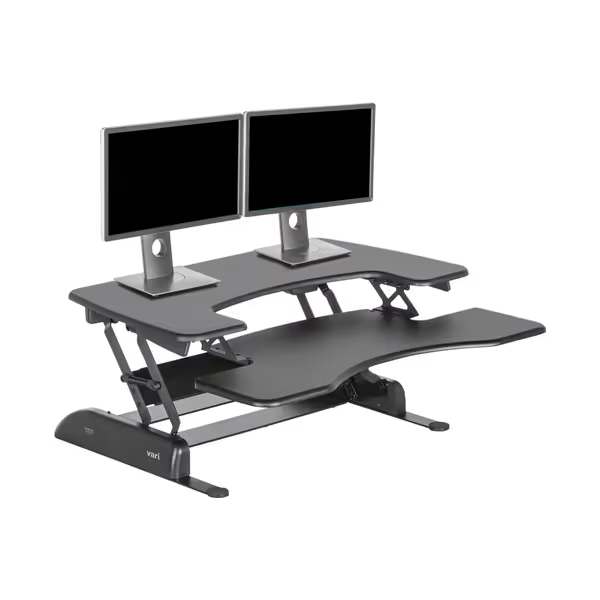
VariDesk Pro Plus 36
Effortlessly converts your desk to standing for dual monitors; built to last.
$399
Max Monitor SetupDual Monitors
Max Monitor SetupDual Monitors
Pros
Rock-solid stability, even at standing height.
Smooth, spring-assisted lifting reduces strain.
Cons
May limit desk space for other items.
Converter footprint is fixed, not ideal for treadmill users.
Solidly built, smooth height adjustments, provides great relief for back and knee pain. Excellent value and no tools needed for setup!
Solidly built, smooth height adjustments, provides great relief for back and knee pain. Excellent value and no tools needed for setup!
What are the maintenance and repair costs over 10 years?
Repairability dramatically impacts lifetime costs:
| **Expense Type** | **Standing Converter** | **Full Standing Desk** |
|----------|---------------|-------------|
| Annual maintenance | $15 (lubricants/adjustments) | $10 |
| Motor replacement | $80-$150 (often uneconomical)| $200-$400 |
| Structural repairs | Limited part availability | Modular component swaps |
| Total 10-yr outlay| $250-$500 | $150-$350 |
Converters like the Uplift E3 lack standardized parts, increasing repair difficulty[5]. Full desks from transparent vendors offer service manuals and spare leg assemblies. That keeps downtime low and costs predictable.
How do space and portability affect total cost?
Space efficiency carries hidden financial impacts:
- Converters save 60% of floor space[1], which is valuable in premium urban areas ($/sq ft). Their 15-25 lb portability enables workspace flexibility[4], though monitor wobble may necessitate $50-$200 stabilizing accessories.
- Full desks require dedicated real estate but provide superior stability, eliminating peripheral shake that can cause errors during video calls[3]. Their fixed nature suits permanent hybrid offices.
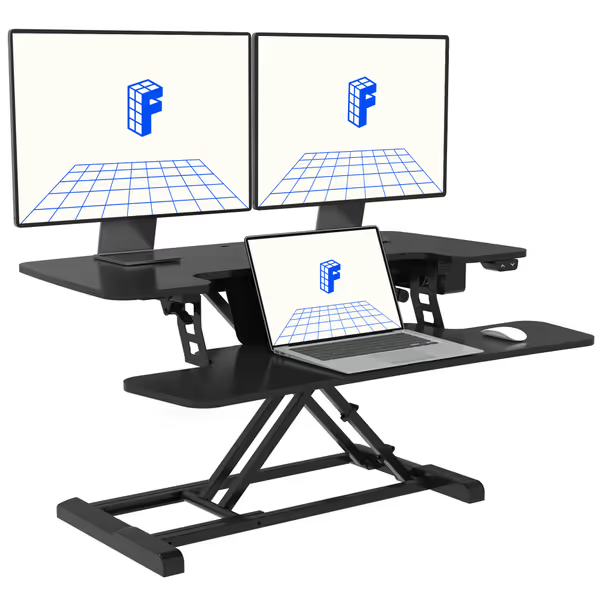
FLEXISPOT Electric Standing Desk Converter
Effortless electric sit-stand conversion for dual monitors, no wobble or crashes.
$199.99
Weight Capacity55 lbs (Desktop: 44 lbs, Keyboard Tray: 11 lbs)
Weight Capacity55 lbs (Desktop: 44 lbs, Keyboard Tray: 11 lbs)
Pros
Smooth, quiet electric lift prevents crashing or jostling.
Spacious 35" surface fits dual monitors + laptop.
Cons
Requires power outlet, not battery operated.
Conversion mechanism adds depth; may extend past desk edge.
Customers find the standing desk converter easy to assemble and use, with high-quality construction and smooth motor operation that keeps everything stable. The product raises and lowers easily multiple times a day, making it convenient for home office use. They appreciate its functionality and consider it worth the price.
Customers find the standing desk converter easy to assemble and use, with high-quality construction and smooth motor operation that keeps everything stable. The product raises and lowers easily multiple times a day, making it convenient for home office use. They appreciate its functionality and consider it worth the price.
What about productivity and health cost implications?
Ergonomic failures create indirect expenses:
- Converters risk improper monitor alignment, potentially increasing neck strain. Limited keyboard tray space may cause wrist fatigue[2], factoring into potential physiotherapy costs ($100-$150/session).
- Full desks enable precise, repeatable height adjustments via memory presets. Proper alignment reduces RSIs, with studies showing 14% productivity gains from reduced discomfort[3].
Which option offers better upgradeability?
Future-proofing favors modular systems:
- Full desks allow surface swaps, leg upgrades, and accessory integration (e.g., CPU holders). Brands like Uplift sell components separately, extending functional lifespan beyond 10 years.
- Converters like the Flexispot EM7 support monitor arms but lack expansion paths. Their fixed dimensions can become obsolete with workspace changes[4].
Verdict: 10-Year Total Cost Analysis
| **Cost Factor** | **Standing Converter** | **Full Standing Desk** |
|-----------|------------|------------|
| Upfront investment | $199-$600 | $500-$2,500 |
| Repairs/maintenance | $400-$700 | $200-$500 |
| Space utilization | -$300 (savings) | +$500 (premium space) |
| Productivity impact | -$1,200 (strain) | +$2,000 (efficiency) |
| **Projected 10-yr** | **$2,899-$4,000** | **$3,200-$5,500** |
For frequent movers or temporary setups, a quality desk riser like the Flexispot EM7 delivers short-term value. For permanent installations, full standing desks justify higher upfront costs through durability, ergonomic precision, and lower lifetime expenses, validating the author's core belief: "Serviceability today saves budgets and landfill space tomorrow."
Further Exploration: Compare warranty terms and parts availability sheets for your shortlisted models. For a concrete example of long-term coverage, see our 20-year standing desk warranty. Prioritize vendors publishing fastener types and repair guides. This increases serviceability and long-term value.
Related Articles