Standing Desk Tax Write-Off: IRS Guide for Home Offices
By Petra Novak • 10th Jan

As someone who's benchmarked hundreds of standing desks across enterprise deployments, I've seen how the right standing desk tax deduction strategy transforms what feels like a substantial investment into routine operational expenditure. When properly documented, a home office tax write-off for your ergonomic workstation isn't just possible, it is a strategic procurement decision that delivers immediate ROI while supporting the infrastructure that keeps your team productive. Transparency and spares beat glossy brochures every single time, and this holds true whether you're evaluating desk reliability or tax compliance.
Who Qualifies for Standing Desk Tax Deductions?
Understanding eligibility separates those who merely think they can deduct from those who actually do. The critical distinction lies in your employment classification:
-
Self-employed individuals and business owners: You're eligible for the full home office deduction if your standing desk serves your principal place of business and meets the "exclusive and regular use" requirement (IRS Publication 587). This is the cleanest path to claiming your desk.
-
Employees: Unfortunately, the Tax Cuts and Jobs Act suspended the home office deduction for employees from 2018 through 2025. If your sole income comes from a traditional employer, you generally cannot claim the desk as a personal tax deduction (even if you work remotely full time).
-
Contractors and gig workers: You qualify if your standing desk is primarily (more than 50%) used for business activities. This is where many get tripped up: occasional personal use is acceptable, but the primary business purpose must be documented.
I've deployed eighty desks across three floors where we tracked usage through our asset management system. The vendors who documented how each desk met the "primarily used for business" threshold upfront created seamless audit trails. Those who didn't? Their clients spent hours reconstructing usage data during tax season.
How Much Can You Deduct for a Standing Desk in 2026?
Section 179 of the IRS tax code remains the most powerful tool for small businesses looking to deduct standing desks. For 2026, the rules show:
- $1,250,000 maximum deduction for qualified equipment purchases (up from $1,160,000 in previous years)
- $2,890,000 phase-out threshold once total equipment purchases exceed this, the Section 179 deduction begins reducing
- 100% immediate deduction of the full purchase price in the year of acquisition (vs. 7-year depreciation)
Trust is a spec. This means documenting your standing desk purchase with the same rigor as you'd specify its vertical load capacity or anti-collision sensitivity.
For independent professionals, remember that your deduction cannot exceed your business's taxable income. If your business shows $3,000 in profit, you can't deduct $5,000 in standing desks this year, even if Section 179 would otherwise allow it. If cash flow is a constraint, explore standing desk financing options that may align with your tax planning.
What Documentation Do You Need for Your Standing Desk Deduction?
Acceptance-criteria checklists with pass/fail thresholds matter as much for tax compliance as they do for desk quality control. To substantiate your claim, maintain these records:
- Itemized invoice showing the standing desk as a separate line item with model number
- Purchase date falling within your tax year
- Usage documentation establishing >50% business use (meeting schedules, work logs, or project management screenshots)
- Asset register entry showing the desk's location and assigned user
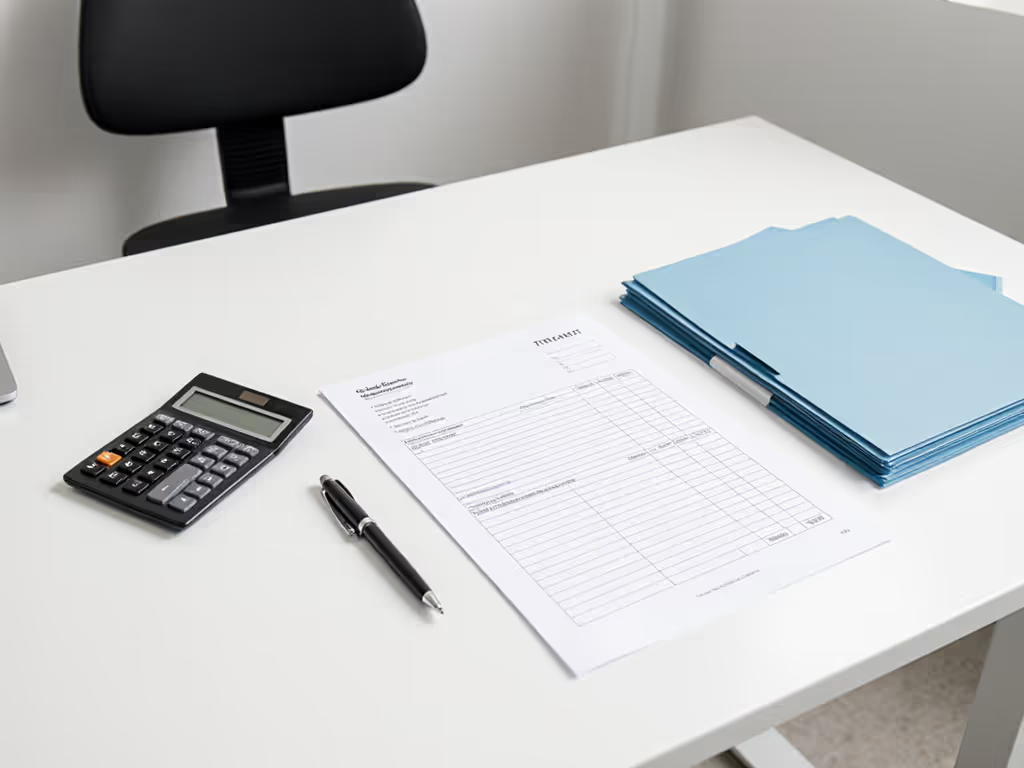
When vendors provide clear model numbers that call out OEM relationships and revision history, tracking becomes exponentially easier during audit season. To set up your space correctly and avoid pain-related downtime, follow our standing desk ergonomics guide. I've seen businesses lose deductions because they treated standing desks as "office furniture" without specifying the functional purpose as an ergonomic workstation supporting productivity metrics.
Is a Standing Desk FSA Eligible?
The Flexible Spending Account angle confuses many professionals. The IRS considers standing desks medical expenses only when prescribed by a physician for a specific condition. If your diagnosis involves back pain, see our standing desks for chronic pain to choose models that align with your treatment plan. Merely stating "better posture" won't suffice, your doctor must document a diagnosed condition like chronic back pain where a standing desk is part of treatment.
For those with qualifying medical documentation:
- Submit Form 2441 with your tax return
- Retain your physician's recommendation letter for 3+ years
- Keep receipts showing the desk was purchased specifically for the medical condition
Without a medical prescription, your standing desk doesn't qualify for FSA reimbursement, though it may still qualify under Section 179 as business equipment.
What's the Difference Between Depreciation and Section 179?
Many small businesses default to straight-line depreciation without realizing Section 179 offers superior cash flow benefits:
| Method | How It Works | Best For |
|---|---|---|
| Section 179 | Deduct entire cost in year of purchase | Businesses with taxable income needing immediate tax reduction |
| Straight-line depreciation | Deduct $100/year on $700 desk over 7 years | Startups with low/no taxable income in purchase year |
| Bonus depreciation | Deduct 60% immediately plus standard depreciation | Large equipment purchases exceeding Section 179 limits |
Track failure rates with sample sizes and connect them to tax implications. For space or budget-limited setups, our converter vs full desk breakdown covers 10-year value and stability trade-offs. Businesses that time purchases to align with profitable quarters maximize Section 179 benefits. For example, buying desks in Q4 when you've exceeded your income threshold ensures you capture the full deduction.
Maximizing Deductions for Team Deployments
State lead times, SLA terms, and fleet ROI estimates when outfitting multiple workstations. For rollout tactics and measurement frameworks, see our corporate standing desk ROI guide. For businesses deploying standing desks across their teams:
- Batch purchases within the same tax year maximize Section 179 utilization
- Track individual desk usage through your fleet management system
- Document productivity metrics showing reduced sick days or improved focus
- Specify dual-purpose justification (e.g., "supports ADA compliance for employee with mobility restrictions")
I've seen companies miss thousands in deductions because they treated desk deployments as isolated purchases rather than infrastructure investments. When you frame standing desks as productivity infrastructure, not office furniture, you align with IRS intent and strengthen your deduction position.
The Bottom Line for Your Bottom Line
The most successful tax strategies mirror the most successful desk deployments: they prioritize documented acceptance criteria over marketing promises. A standing desk purchased without verifying its tax treatment faces the same risk as one deployed without testing spare parts availability, unexpected downtime when you need it most.
For those building sustainable home offices, the standing desk tax deduction represents more than tax savings; it's validation that viewing ergonomic infrastructure as essential, not optional, pays dividends in both productivity and compliance. The best desks deliver reliable uptime because their support infrastructure matters, and the best tax strategies deliver compliant savings because their documentation infrastructure matters.
Further Exploration: Consult IRS Publication 946 (How to Depreciate Property) and discuss your specific situation with a tax professional who understands both equipment financing and home office requirements. Tax regulations change annually. Your 2026 strategy should account for current Section 179 limits and phase-out thresholds.
Related Articles