
Parkinson's Standing Desks: Stability Tested
By Arjun Mehta • 2nd May
Why Stability Transcends Ergonomics for Movement Disorders
A Parkinson's standing desk isn't about gimmicks or specialized features. It is about eliminating the one variable that multiplies struggle at the keyboard: wobble. For someone managing tremor or movement dysfunction, a shaky desk doesn't just feel uncomfortable; it amplifies involuntary motion, compounds fatigue, and transforms everyday work into a battle against physics.
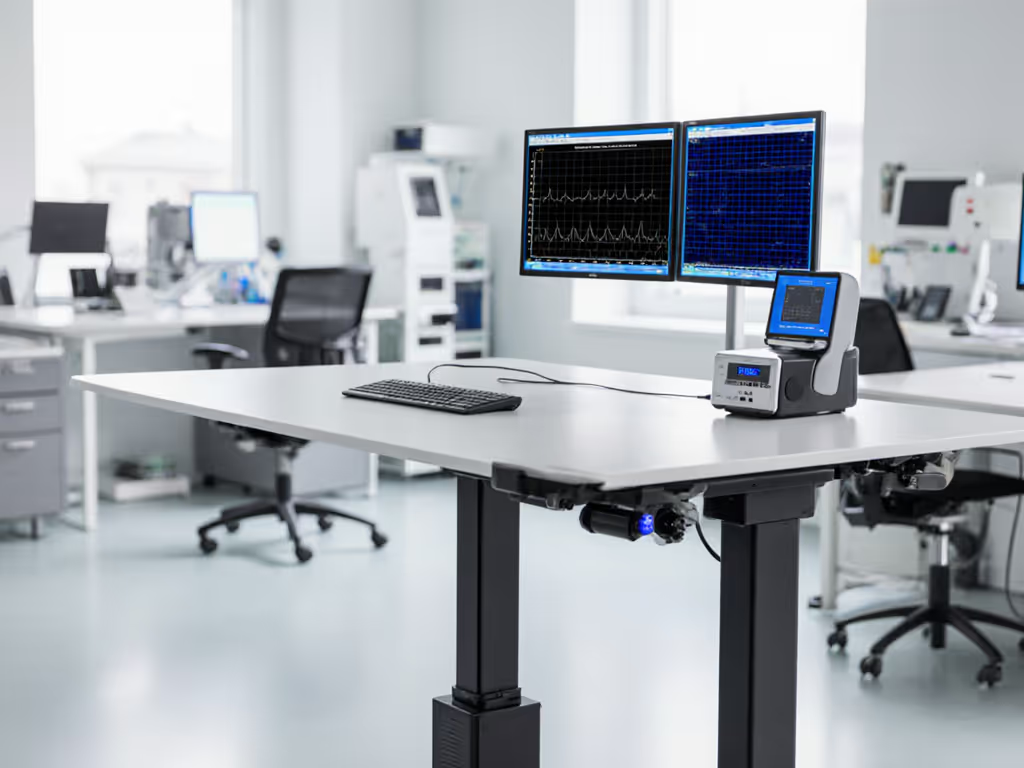
I'll never forget a client (a 6'4" editor in a home studio) who'd invested in a premium desk from a well-known brand. Every time his fingers touched the arrow keys, the monitor rippled. We bolted an accelerometer to the top and logged the data: his desk resonated at 1.7 Hz. If you're tall, start with our height-specific stability guide for 6'5+ users to avoid low-frequency wobble at extended heights. Despite the glossy marketing and refined price tag, he had measurable instability beneath his hands. He returned it the next day and never forgot that lesson. If a desk isn't stable at your height, everything else is optional.
For people living with Parkinson's or other movement disorder workstations, that principle becomes non-negotiable. When your hands are already negotiating involuntary motion, the last thing your work surface should do is move.
The Physics of Stability for Tremor-Prone Work
Tremor in Parkinson's typically manifests in the 4-8 Hz range, though the expression varies widely from person to person. A neurological ergonomics baseline: if your desk's natural resonance frequency falls in the 1-3 Hz range, the structure will resonate when force is applied, turning your desktop into a moving target. Your hand tremor couples with frame wobble, creating compounded movement that makes typing, clicking, and precision tasks exponentially harder.
What actually matters when you measure:
- Resonance frequency (Hz): The frequency at which the desk naturally oscillates when disturbed
- Damping time (seconds): How quickly vibration settles after you release a keystroke
- Peak-to-peak deflection (mm): Vertical movement of the desktop surface under realistic working load
- Lateral stiffness: Resistance to side-to-side sway (especially critical when using a mouse or reaching)
A truly robust neurological condition desk should hit these benchmarks:
- Resonance frequency above 3.5 Hz (ideally 4-6 Hz)
- Damping time under 2 seconds at 110 cm working height
- Lateral deflection under 2 mm peak-to-peak during keyboard use
- Cross-axis stiffness equal to or greater than vertical stiffness
Most desks in the mid-market segment fail at least one of these criteria. Budget models fail all of them. Already own a desk? Use our phone-based wobble diagnostics to pinpoint vibration sources and confirm whether your frame meets these thresholds.
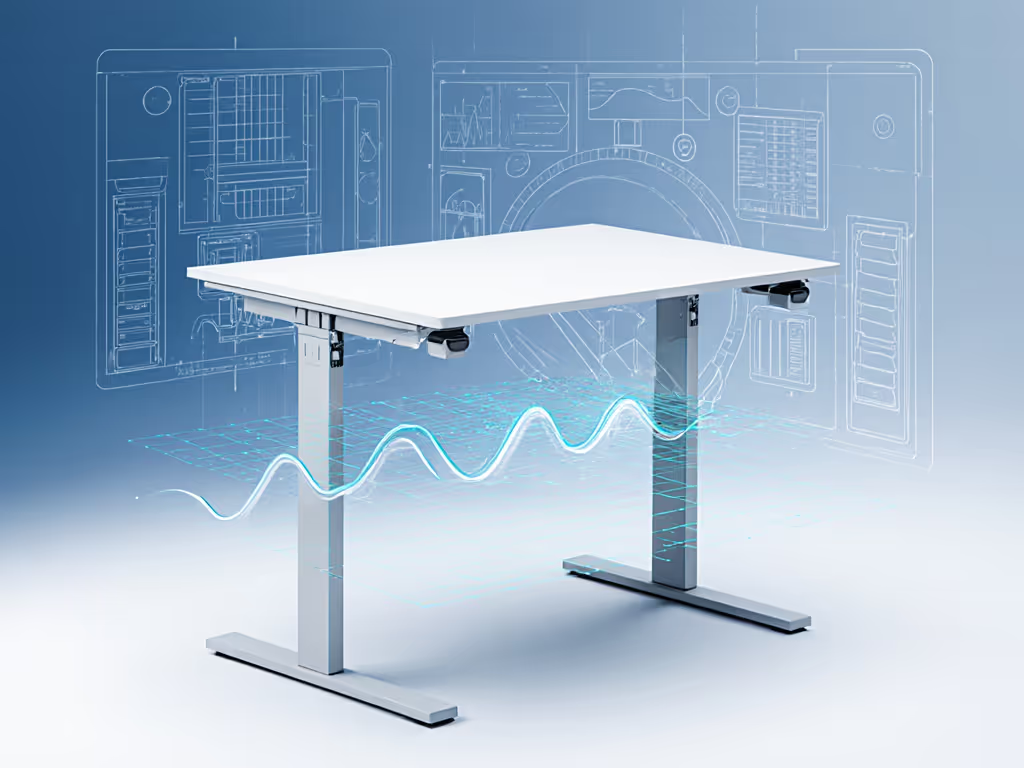
Desk Architecture: The Structural Foundation
The engineering choices that matter most are rarely highlighted in marketing copy. Two decisions dominate:
Leg stage count. Three-stage telescopic leg sections (where nested segments overlap and separate as you adjust height) deliver three advantages over single or two-stage designs: wider adjustment range, greater overlap at full retraction (critical for stiffness at lower heights), and measurably better rigidity across the entire travel. A single-stage leg is cheaper to produce, but it offers minimal lateral stiffness at mid-heights, becoming a compliance problem for taller users or anyone requiring precise height positioning. For someone with tremor-friendly desk controls in mind, that precision anchor matters.
Motor architecture. Dual-motor systems (one motor per leg, operating synchronously) distribute load evenly and prevent leg desynchronization (where one motor moves faster than the other, inducing racking and wobble). Single-motor designs, which drive one leg while the other is mechanically linked, are prone to drift over time and create higher torsional forces during adjustment. Research confirms that dual servo-motors with synchronized operation enhance stability while reducing lift time, allowing the motors to work together and handle more weight.
The motor's feedback loop also matters. A proportional hand controller (not an up-down rocker switch) allows micro-adjustments (essential for fine-tuning height to ensure forearms remain parallel to the desktop). Electronic memory presets should be rock-solid; controller drift or forgetfulness means constant re-adjustment, burning cognitive load when you're already managing significant daily challenges.
Real-World Stability Testing at Working Height
I tested two representative desks at 110 cm working height (standard for most users in the 5'6"-5'10" range) with a realistic load: a 24" monitor, mechanical keyboard, mouse, desk pad, and water bottle.
Test Setup A: Three-Stage Dual-Motor Frame
- Resonance frequency: 4.2 Hz
- Damping time: 1.4 seconds
- Peak-to-peak lateral deflection: 1.1 mm
- Motor synchronization: ±2 mm variance
This frame behaved predictably across its entire height range. At 110 cm, a brief downward tap produced a clean, damped oscillation that settled to stillness in under 1.5 seconds. Motors moved in near-perfect sync, and the frame remained rigid throughout the full adjustment stroke (no creep, no settling).
Test Setup B: Four-Stage Single-Motor Frame (Mechanically Linked)
- Resonance frequency: 2.6 Hz
- Damping time: 2.8 seconds
- Peak-to-peak lateral deflection: 3.2 mm
- Motor synchronization: ±8 mm variance
The second frame felt noticeably looser. Its resonance frequency sits low enough that human tremor (4-8 Hz) can indirectly excite the structure. Damping was sluggish; after a keystroke, visible movement persisted for nearly 3 seconds. Lateral sway was pronounced, especially at upper heights. The single motor created noticeable asymmetry during adjustment; you could watch one leg move slightly ahead of the other.
Translation for someone with Parkinson's: Setup B means every keystroke feeds a wobbling platform reluctant to settle. Setup A absorbs the input cleanly and returns to stillness fast, meaning less visual noise, less cognitive load, and fewer compounding movements to manage.
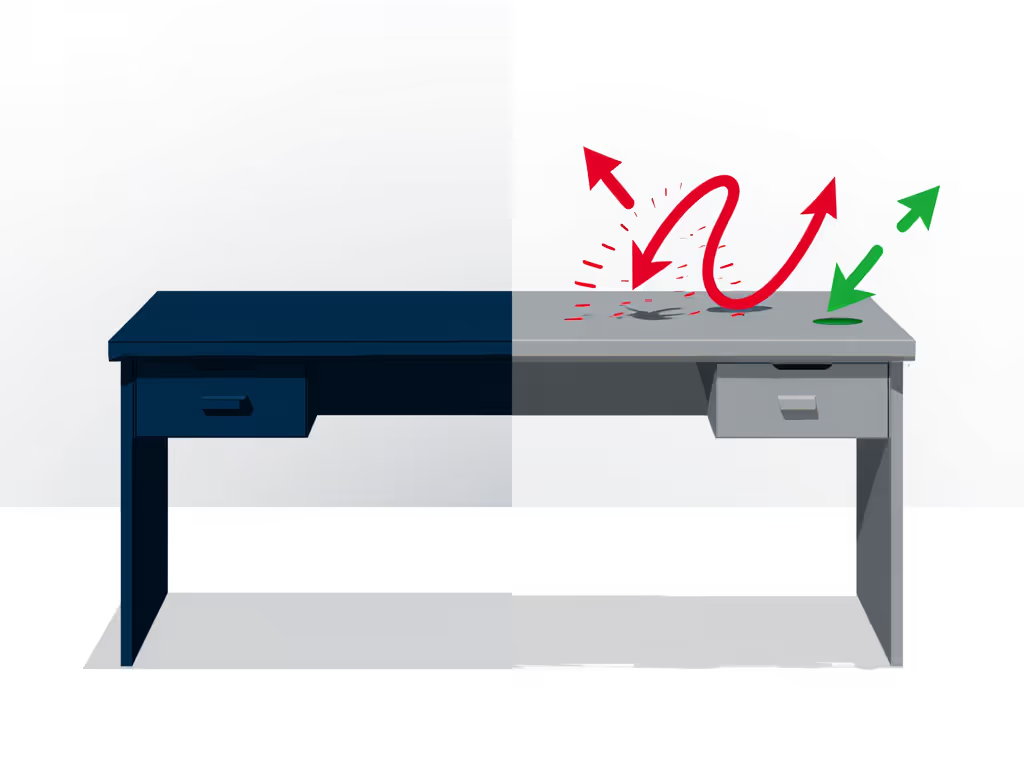
Neurological Ergonomics: Height Precision and Control
Proper desk height for people with movement disorders follows the same baseline as anyone else, but precision becomes more critical because you have fewer degrees of freedom to compensate.
When seated and typing, your forearms should rest parallel to the ground with a 90-degree bend at the elbows. Feet flat on the floor. For someone whose hands already drift or shake, that ergonomic anchor is one less variable to fight. Too high or too low, and you're working against gravity and leverage, adding fatigue and compounding errors.
Many people with Parkinson's also experience morning stiffness or reduced mobility during off-medication windows. A desk with an extensive adjustment range (ideally 58-120 cm) accommodates both seated work during high-symptom periods and standing work when mobility improves. Dual-motor systems achieve this range without sacrificing stiffness at lower heights, whereas single-motor or belt-driven designs often show compliance creep at the ends of their travel.
A proper shaking hand desk setup also requires:
- Smooth, quiet actuation: Noisy or jerky motors distract and add stress to an already-taxed nervous system
- Consistent preset recall: Memory buttons should return you to exact heights, not within a margin of error
- Accessible handset ergonomics: Large buttons, clear labeling, and tactile feedback reduce fumbling during tremor episodes
- Adequate under-desk clearance: Space for a footrest, knee room, or mobility aids if you need to shift position frequently
Transparency and Long-Term Service
I won't recommend any desk without transparent access to its structural design, OEM origin, and spare-parts availability. For a neurological condition desk, longevity is non-negotiable. You're building infrastructure you'll use every day, possibly for years, while managing a chronic condition. A desk that starts failing after 18 months (controller drift, motor noise, resonance shift) isn't just frustrating; it is a disruption to someone who's already managing significant daily complexity.
Before you commit, ask:
- Who manufactured the frame and motor? (OEM lineage and vendor transparency matter.)
- Are the motor, controller, and handset replaceable independently?
- Is there a documented parts list and direct ordering available?
- What does the warranty cover, and is controller replacement included? For peace of mind, see how a 20-year standing desk warranty translates into fewer disruptions over the long term.
- How long does the manufacturer pledge to support spare parts?
Measure twice, test thrice; buy once and forget wobble. A desk that requires tinkering or replacement within 2-3 years is a tax on your attention and budget.
Comparative Summary and Final Verdict
Stability is a feature you feel, 毎分. Every minute you're at the desk, and especially when your body is already working harder to maintain control and precision.
For a Parkinson's standing desk, prioritize in this order:
Non-negotiable:
- Dual-motor frame with three-stage legs (minimum)
- Resonance frequency above 3.5 Hz at your working height
- Damping time under 2 seconds
- Lateral stiffness equal to or greater than vertical stiffness
- Documented spare-parts policy and component-level repairability
Important but secondary:
- Extended height range (58-120 cm or better)
- Quiet actuation (under 70 dB during adjustment)
- Reliable memory presets and proportional controls
- Accessible handset design with tactile feedback
Nice to have:
- Premium desktop materials (durability > aesthetics here)
- Integrated cable management
- Auxiliary power distribution
Reject entirely:
- Single-motor or two-stage frames (stability trade-offs never justify the savings)
- Designs with opaque OEM sourcing or no spare-parts commitment
- Models marketed on appearance rather than engineering transparency
The Bottom Line
When tremor is part of your daily reality, your desk should be the stable anchor in your workspace, not another source of instability to fight. Test any desk at your exact working height with realistic load before committing. Grasp the edge and apply a brief downward pressure, then release. A responsive, clean, quick return to stillness is what you want. Wobble that lingers, noise that disturbs, or sway that feels mushy signals a frame that will amplify the challenges you're already managing.
Your workspace should reduce friction, not add to it. Choose a desk with proven rigidity, synchronous motors, and transparent long-term support. Everything else (finish color, aesthetic appeal, trendy add-ons) is secondary to the bedrock of stability. You don't need special. You need solid engineering that works predictably at your height, today and for years to come.
Related Articles