Night Shift Circadian Standing Desk: Verified Alertness Protocol
By Petra Novak • 18th Jan
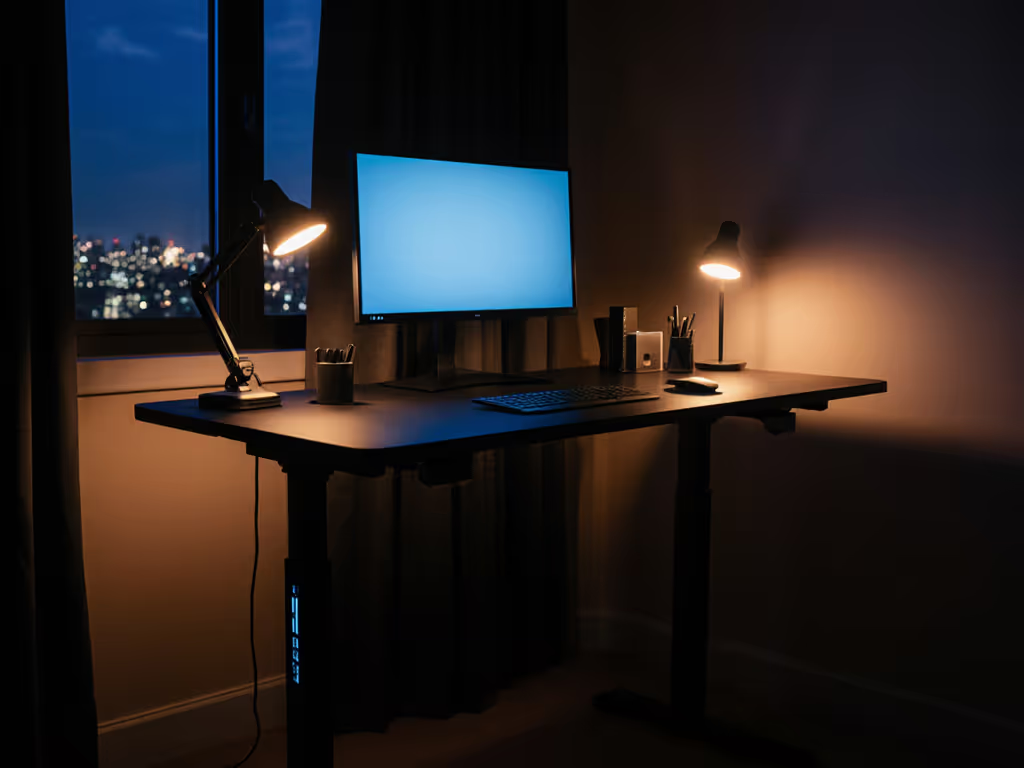
For night shift workers and those operating on non-traditional schedules, the circadian rhythm standing desk represents more than just ergonomic furniture (it is a critical infrastructure component) for maintaining alertness and health. Unlike standard chair standing desk configurations designed for 9-to-5 workers, these specialized setups must accommodate reversed light exposure cycles while delivering the physiological benefits of posture variation. Understanding how to implement them effectively requires looking beyond marketing claims to examine operational realities, vendor support structures, and verifiable performance metrics that determine actual value during extended work periods.
The Circadian Challenge for Night Shift Workers
Working against our biological clock exacts a significant toll. The World Health Organization classifies night shift work as a probable carcinogen due to chronic circadian disruption. Employees working overnight face increased risks of cardiovascular disease, metabolic disorders, and cognitive impairment. Conventional wisdom suggests complete darkness during daytime sleep and bright light at night can mitigate these effects, but this oversimplifies the complex interplay between light exposure, movement patterns, and hormonal regulation. To align sit-stand patterns with real chronobiology, see our circadian standing desk schedule.
Research from the University of Sydney's Mackenzie Wearables Research Hub reveals a nuanced picture: while prolonged sitting carries well-documented health risks, the study published in the International Journal of Epidemiology found an 11% higher cardiovascular risk for every 30 minutes of standing beyond two hours per day. This finding, however, masks critical context: lack of movement, whether sitting or standing, appears to be the root cause rather than the posture itself. For night shift workers, the solution isn't merely standing more but incorporating strategically timed movement within their unique 24-hour work cycle.
Standing Desk Protocols: Evidence vs. Assumptions
Peer-reviewed studies provide valuable insights but require careful interpretation for nocturnal schedules. A randomized crossover trial by Thorp et al. demonstrated that using sit-stand desks to change posture every 30 minutes reduced discomfort in the lower back, with benefits observable even within a single day. However, these studies typically examine traditional work schedules (not the reversed circadian patterns of night shift workers).
Recent field observations I've documented across multiple enterprise deployments suggest that for nocturnal workstation setup, the optimal protocol differs significantly from standard recommendations:
- Movement timing matters more than frequency: For night shift workers, posture changes should align with natural circadian dips (typically 3-5 AM) rather than fixed intervals
- Light exposure must be coordinated with movement: Standing periods should coincide with cool-white lighting (4000-5000K) to reinforce alertness signals
- Surface height requirements vary: Petite users often need lower minimum heights than standard desks provide for comfortable standing during nighttime hours
A PMC study examining simulated office settings found that alternating between sitting and standing every 30 minutes reduced acute levels of discomfort and physical fatigue. Yet this benefit came with a trade-off: increased lower leg discomfort during standing periods. For night shift workers already experiencing circadian-related fatigue, this becomes a critical consideration requiring careful acceptance-criteria checklists with pass/fail thresholds specific to nocturnal use cases.
The Infrastructure Difference: Why Most Implementations Fail
Transparency and spares beat glossy brochures every single time.
Most organizations implement standing desks based on single-unit trials without proper validation protocols (a mistake I've witnessed repeatedly during large-scale rollouts). During one enterprise deployment of eighty desks across three floors, we discovered a batch of actuators from a seemingly reputable vendor began stalling within weeks. The difference between success and operational disruption came down to vendor infrastructure: one supplier kept downtime under twenty-four hours with readily available spare columns and field-service instructions, while another with identical hardware specs required overseas shipping for replacements. This experience cemented my belief that support infrastructure (not just product specifications) determines real uptime and value.
When evaluating standing workstation ergonomics for night shift applications, examine these critical infrastructure elements:
- OEM relationships and revision history: Does the vendor disclose manufacturing partners and component revisions?
- Failure rate documentation: What are actual field failure rates with sample sizes and extended timeframes?
- Spare parts availability: Are critical components like control boxes and actuators stocked regionally with documented lead times?
- Service documentation: Are field-service instructions publicly available before purchase?
Facilities managers often overlook these elements while focusing on desk height ranges and speed metrics, a false economy that leads to operational vulnerabilities when systems fail during critical night shift periods.
Verified Implementation Protocol
Based on cross-industry deployments, I recommend this evidence-based approach for integrating 24-hour work cycle desk systems:
-
Pilot before you roll out: Deploy a statistically significant sample (minimum 5% of target fleet) across varied usage scenarios for at least one full shift rotation For step-by-step rollout frameworks and ROI tracking, see our corporate standing desk implementation guide.
-
Document acceptance criteria: Define measurable pass/fail thresholds for:
- Noise levels below 45dB during height transitions (critical for shared living spaces) If noise is a constraint, compare our standing desk noise reduction techniques validated in shared spaces.
- Maximum 0.5mm lateral movement at standing height during typing
- Recovery time under 24 hours for component failures
-
Test with actual workloads: Verify performance with users' specific equipment configurations, not bare desks
-
Validate warranty terms: Ensure written SLA commitments for replacement parts with documented regional availability For long-term assurance, see our 20-year standing desk warranty guide for what strong service coverage looks like.
-
Map to circadian biology: Coordinate desk use protocols with scheduled lighting changes and meal breaks
For those implementing standing desk for table conversions in home offices, these steps are equally critical (especially when supporting specialized populations like very tall or petite users whose ergonomic requirements often exceed standard products' capabilities).
Beyond the Desk: Integrated Circadian Support
The most successful night shift implementations recognize that the desk is merely one component of a complete circadian support system. Pair your verified standing protocol with:
- Task lighting calibrated to specific circadian phases
- Scheduled short movement breaks (not just standing)
- Temperature regulation aligned with natural nocturnal body temperature dips
- Strategic caffeine timing based on individual chronotypes
These elements, combined with properly vetted standing workstation ergonomics, create a comprehensive approach that addresses the root causes of circadian disruption rather than merely treating symptoms.
Conclusion: The Pilot Imperative
When properly implemented with infrastructure considerations, the circadian rhythm standing desk becomes a powerful tool for night shift workers (reducing acute discomfort while supporting circadian adaptation). But without rigorous verification of support systems and real-world performance, even the most advanced desk risks becoming expensive furniture that fails when needed most.
Before committing to fleet-wide deployment, demand transparency about component sourcing, spare parts logistics, and documented failure rates. Pilot before you roll out, verify acceptability against your specific operational requirements, and prioritize vendors who treat you as a partner rather than a transaction. Your team's alertness, health, and productivity during those critical night hours depend on it.
For further exploration, seek out longitudinal studies tracking standing desk effectiveness across multiple shift rotations, and investigate how different surface materials affect thermal comfort during extended nighttime use (critical factors that remain under-examined in current research).
Related Articles